
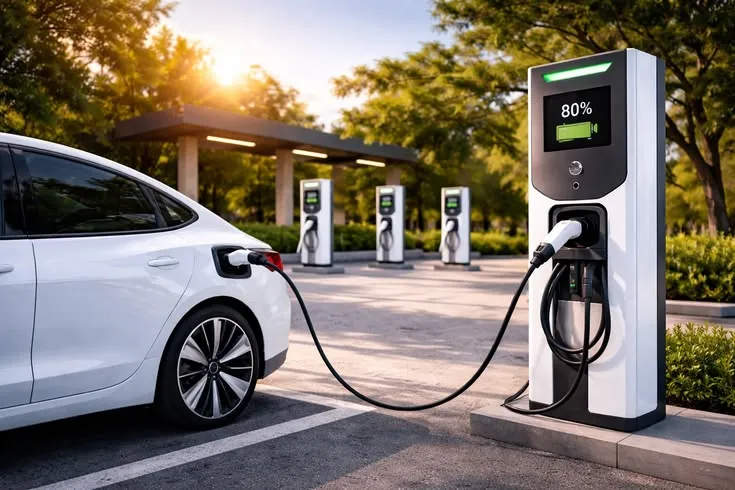
Installing chargers at a workplace can support employees, visitors, or fleet vehicles, but the project becomes complicated when every user is treated as if they need maximum power at the same time. A commercial EV charger installation should be planned around parking duration, daily driving, and the building’s available electrical capacity. For many workplaces, the most important question is not how many chargers can be installed immediately, but how charging demand can be organized so the system remains practical as EV use grows.
Separate Employee, Visitor, and Fleet Needs
These groups usually behave differently. Employees may park for eight hours, visitors may stay briefly, and fleet vehicles may need to leave at fixed times.
If all spaces are designed around the same charging speed, the business may overinvest in some areas while under-serving others. Define the user groups before deciding on equipment.
Estimate How Long Vehicles Remain Parked
Long parking periods can create flexibility. An employee vehicle that stays all day may not need the same charging rate as a delivery vehicle returning late and leaving early.
Understanding dwell time helps determine whether charging can be distributed over longer periods rather than concentrated into short bursts.
Identify Peak Building Demand
Chargers share the property’s electrical system with lighting, HVAC, computers, machinery, kitchens, and other equipment. The available capacity may change throughout the day.
A Commercial Electrician Near Me can help assess electrical conditions, while the business should provide information about operating hours and major equipment. Combining these perspectives gives a more realistic view of when charging demand can be added.
Decide Whether Charging Needs Rules
Workplace charging can become inefficient if vehicles remain connected long after they have received enough energy while other drivers are waiting.
Simple policies can clarify who may use the chargers, whether spaces need to be moved after a certain period, and how fleet vehicles are prioritized. Operational rules can sometimes solve congestion before more equipment is added.
Plan the Parking Layout for Growth
The first chargers should not make future expansion difficult. Consider conduit routes, electrical-room access, and which parking rows could support additional units later.
A phased layout can allow the business to learn from actual use before committing to a larger system.
Use Data From the First Phase
After launch, track how often chargers are occupied, how long vehicles remain connected, and when demand is highest. These patterns can show whether the next investment should add more connectors, increase available power, or improve parking management.
Real usage data is usually more valuable than predicting every future behaviour before the first charger is installed.
Communicate Clearly With Users
Employees need to understand how the system is intended to work. Clear signage, internal guidance, or a simple booking process may reduce confusion.
If visitors also use the chargers, instructions should be easy to understand without requiring knowledge of internal workplace policies.
Consider Accessibility and Everyday Movement
Charger locations should be integrated with safe pedestrian routes and the normal use of the parking area. Cables should not create unnecessary obstacles, and equipment should be positioned with snow clearing and maintenance in mind.
Review the System as EV Adoption Changes
The review should include user behaviour as well as electrical capacity. If drivers routinely arrive with more remaining range than expected, the workplace may discover that slower shared charging is adequate. If fleet schedules become tighter, the opposite may be true.
A charging plan that works for five EV drivers may not work when twenty employees arrive in electric vehicles. Review usage periodically and update policies or infrastructure as necessary.
The goal is a system that evolves rather than one designed around a single moment in time.
Conclusion
Workplace EV charging is most effective when power is matched to real parking behaviour. Employee vehicles, visitors, and fleets each create different timing and charging needs, while the building’s existing electrical demand sets practical limits.
By defining user groups, measuring dwell time, creating sensible charging rules, and expanding from real usage data, businesses can avoid treating every vehicle as an identical load. A phased approach can make the infrastructure easier to manage today while leaving a clear path for growth as electric vehicle adoption increases.